Basement Waterproofing: Your First Defense Against Mold
Basements and crawl spaces are ground zero for mold problems in most homes. On Maryland’s Eastern Shore, where high water tables and humid conditions are the norm, proper waterproofing isn’t just about keeping your basement dry - it’s essential for preventing mold growth throughout your entire home.
[AddInfographic]
Why Basements Are Vulnerable to Mold
You know how some people think a “little bit of dampness” in the basement is normal?
From what we’ve seen in the field, that acceptance is actually the biggest risk to your home’s air quality.
The reality is that mold doesn’t need standing water to thrive; it only needs a relative humidity level above 60% and a food source like drywall or wood. On the Eastern Shore, we face a unique “perfect storm” of environmental factors that makes our basements particularly vulnerable.
Below-Grade Pressure
Our local geography works against us here.
- Hydrostatic Pressure: In counties like Wicomico and Worcester, the water table can be as shallow as 0-35 feet. This creates immense pressure that pushes groundwater through even microscopic cracks in your foundation.
- Soil Composition: The sandy loam and clay mixtures common in our region hold moisture against your walls long after the rain stops.
- The Stack Effect: Warm air rising in your home creates a vacuum that pulls cool, damp, moldy air up from the basement into your living spaces.
The Condensation Trap
Temperature differentials are another silent culprit.
- Dew Point Issues: Your basement walls are naturally cooler than the ambient air. When warm, humid air from a Maryland summer hits these cool surfaces, it condenses immediately.
- Ventilation Limits: Without active airflow, this stagnant, moisture-laden air sits undisturbed, allowing mold spores to colonize in as little as 24 to 48 hours.
Signs Your Basement Has Moisture Problems
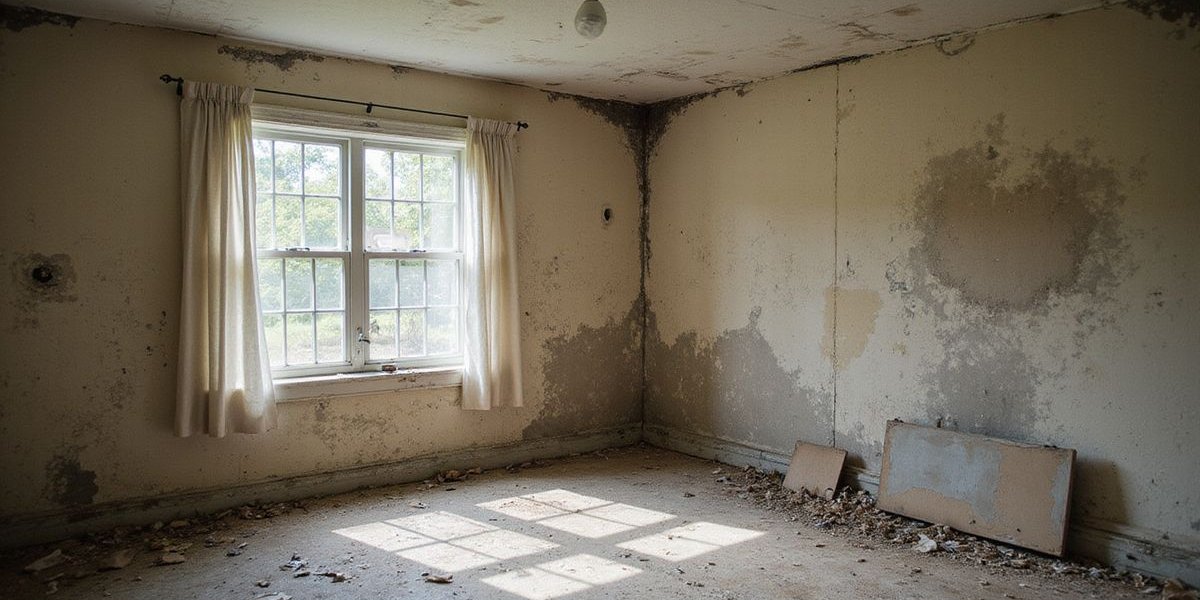
Before you see the fuzzy green or black spots of a full-blown colony, your home will give you subtle warnings.
Catching these early can save you thousands in remediation costs.
Visual Indicators
Look closely at your bare concrete or finished walls.
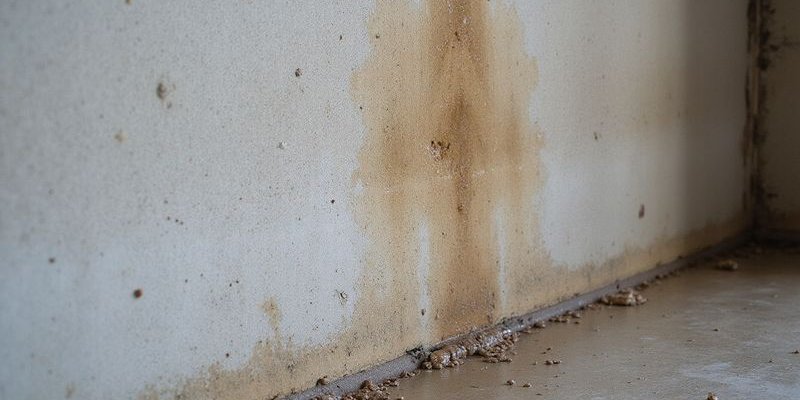
- Efflorescence: This is that white, powdery substance on concrete walls. It’s not mold itself, but it is salt left behind by water evaporating through your wall—a sure sign of intrusion.
- Tide Marks: Discoloration near the bottom of walls indicating where water has risen and receded.
- Rust Stains: Check the nails in your baseboards or metal feet on appliances. Rust here means humidity is consistently too high.
Physical & Olfactory Indicators
Your nose often knows before your eyes do.
- The “Earthy” Smell: That musty odor is actually caused by Microbial Volatile Organic Compounds (mVOCs), which are gasses released by actively growing mold.
- Warped Doors: If your basement doors stick in the summer, it’s a sign of swelling due to high humidity.
- High Hygrometer Readings: If you don’t have a digital hygrometer, get one. Consistent readings over 60% are a red flag.
Structural Warning Signs
Water is powerful enough to move your house.
- Step Cracks: Stair-step cracking in cinder block walls often indicates foundation settling or bowing from soil pressure.
- Cove Joint Seepage: Water trickling in where the wall meets the floor is the most common failure point in older basements.
Interior Waterproofing Solutions
When we talk about “waterproofing” from the inside, we are technically talking about water management.
The goal is to capture water that enters and remove it before it causes damage.
Interior Drainage Systems
This is the workhorse of a dry basement.
French Drain Systems
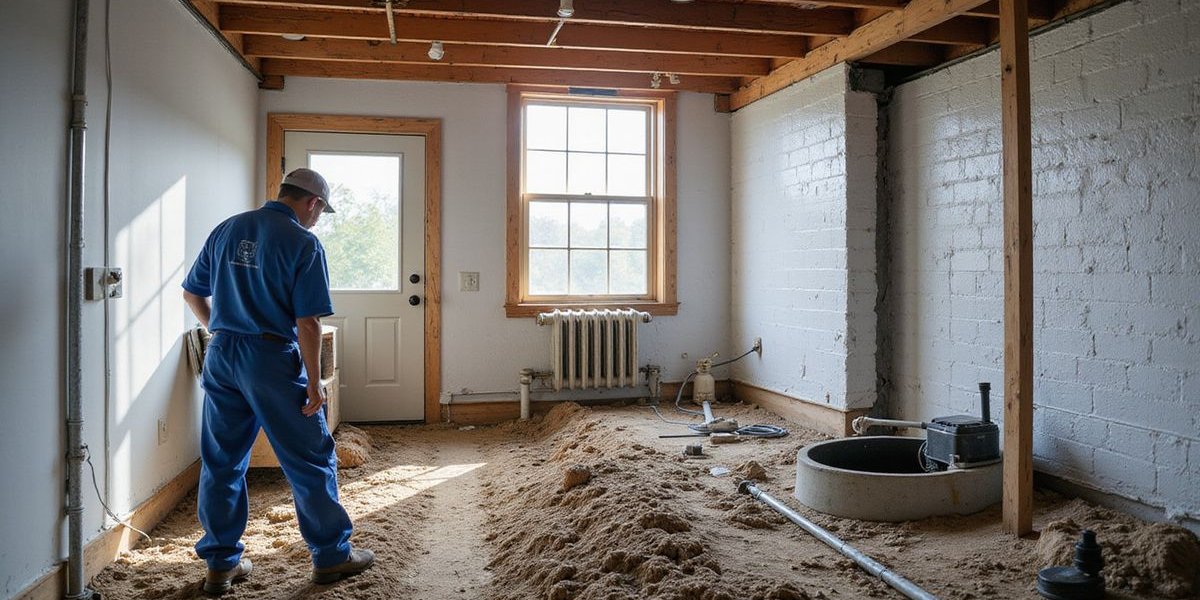
- How it works: We trench the perimeter of the floor, install perforated pipe surrounded by gravel, and re-concrete over it.
- The “Weep Hole” Trick: Professional installers drill small holes into the bottom block of the wall to drain trapped water directly into the system.
- Cost Reality: In 2025, a quality interior drain system typically runs $40-$100 per linear foot. While not cheap, it is permanent.
Sump Pump Systems: The Heart of the System Your drainage system is only as good as the pump moving the water out.
- Go Cast Iron: We strongly advise against plastic pumps found at big-box stores. Look for cast-iron models like the Zoeller M53 or Liberty Pumps 257. They dissipate heat better and handle the high workload of our region.
- Battery Backup is Mandatory: In a coastal storm, you often lose power exactly when you need your pump most. A battery backup system isn’t an “extra”—it’s your insurance policy.
Interior Sealants and Coatings
Don’t rely on “waterproof paint” alone.
Penetrating Sealers (Silane/Siloxane)
- Why we like them: These penetrate deep into the concrete pores and create a hydrophobic barrier without changing the look of the wall. They typically last 7-10 years.
- Best for: Unfinished concrete walls that are structurally sound but damp.
Silicate Densifiers
- How they work: They react chemically with the free lime in concrete to permanently block the pores.
- Best for: Strengthening aging concrete and stopping minor capillary seepage.
| Sealer Type | Best Use | Longevity | ”Insider” Note |
|---|---|---|---|
| Acrylic Paint | Cosmetic only | 1-3 Years | Often peels if hydrostatic pressure is high. Avoid as a primary defense. |
| Silane/Siloxane | Water Repellent | 7-10 Years | Invisible finish; allows concrete to “breathe” while stopping water. |
| Silicate | Concrete Hardening | Permanent | Chemically bonds with concrete; cannot peel off. |
Vapor Barriers
- Wall Barriers: Heavy-duty plastic sheeting (12-20 mil thick) directs wall leakage down into your drainage system.
- Floor Barriers: Essential before laying any finished flooring to prevent mold from growing under your carpet or laminate.
Exterior Waterproofing Solutions
Exterior waterproofing is the only true way to stop water before it touches your walls, but it comes with a significant price tag.
Foundation Excavation & Membranes
This is a major construction project.
- The Process: Excavating soil down to the footers (often 6-8 feet deep), cleaning the wall, and applying a liquid rubber membrane.
- Drainage Boards: We install dimpled plastic sheets over the membrane. These protect the rubber and create an air gap that allows water to fall instantly to the footer drain.
- Cost Factor: Because of the heavy excavation, exterior waterproofing can cost $100+ per linear foot.
Exterior French Drains
- Footing Drains: A perforated pipe installed at the base of the footing.
- The Clog Risk: Over decades, these can clog with silt or tree roots. Modern systems use a filter fabric “burrito” wrap to extend their lifespan.
Grading and Drainage
Simple landscaping fixes can solve 50% of basement moisture issues.
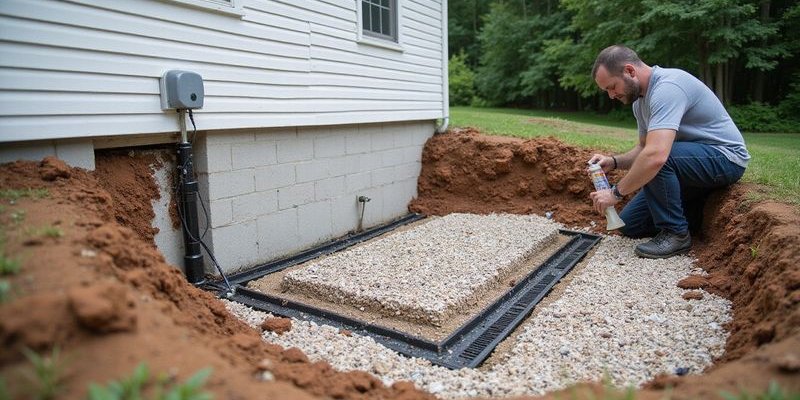
- The 6-Inch Rule: Ensure the ground slopes down 6 inches over the first 10 feet away from your foundation.
- Downspout Extensions: Dump roof water at least 6-10 feet away from the home. If you have a 1,000 sq. ft. roof, 1 inch of rain equals 600 gallons of water dumping right next to your foundation.
Window Wells and Foundation Vents
Window Well Solutions
- Drainage is Key: A window well without a drain is just an aquarium waiting to fill up. Ensure the drain connects to your interior or exterior tile system.
- Covers: Clear polycarbonate covers keep leaves and rain out while letting light in.
Foundation Vent Management
This is a controversial topic, but the science is settled.
- The Old Advice: “Open vents in summer to let the house breathe.”
- The Modern Reality: Opening vents in a humid Maryland summer brings wet air into a cool crawl space, causing massive condensation.
- Our Recommendation: Seal the vents and condition the space with crawl space encapsulation. It’s the only way to control moisture year-round.
- Flood Vents: For homes in FEMA flood zones, you must use compliant flood vents (1 sq. inch of opening per 1 sq. foot of space) that automatically open during a flood surge.
Humidity Control: The Final Line of Defense
Even a waterproofed basement can be moldy if the air is humid.
Dehumidifiers: Size Matters
A standard 50-pint unit from a hardware store often struggles to keep up with a damp Maryland basement.
- Pro Grade Units: We recommend high-capacity units like the AprilAire E100 or Santa Fe Compact70. These remove more water per kilowatt of electricity and are built to run 24/7.
- Placement: Hang the unit or place it on blocks to allow for gravity drainage so you never have to empty a bucket.
Insulation
- Spray Foam: Closed-cell spray foam is the gold standard for rim joists. It seals air leaks and provides high R-value insulation in one step.
- Rigid Foam Board: great for basement walls as it doesn’t absorb moisture like fiberglass batts do.
Special Considerations for Eastern Shore Homes
Our region presents challenges you won’t find in the rest of the country.
High Water Tables & Salt
In areas like Salisbury and Ocean City, the groundwater often has a higher chloride (salt) content.
- Impact: Salt corrodes standard metal pump components faster.
- Solution: Use pumps with epoxy-coated cast iron or stainless steel components to resist corrosion.
Storm Surge Risk
- Check Your Zone: Many of our neighborhoods are in flood zones that require specific flood-compliant construction.
- Flood-Resistant Materials: If you finish your basement, use materials that can survive a wetting event, like vinyl plank flooring instead of carpet and paperless drywall.
When to Call Professionals
Knowing your limits can save your home’s foundation.
| Project Type | DIY Friendly? | Why? |
|---|---|---|
| Downspout Extension | ✅ Yes | Simple, low risk, high reward. |
| Grading Soil | ✅ Yes | Labor intensive but technically simple. |
| Interior Crack Injection | ⚠️ Maybe | Kits exist, but improper sealing can trap water inside the wall. |
| Sump Pump Install | ❌ No | Requires plumbing and electrical expertise; failure risks flooding. |
| French Drain Install | ❌ No | Involves jackhammering concrete and managing structural footing risks. |
The Mold Connection
Here is the bottom line: Mold needs 24-48 hours of moisture to grow. If you already have a moisture problem, our basement mold remediation service can help.
Every waterproofing measure you take buys you time. If you keep the humidity under 60% and the floor dry, mold spores simply cannot colonize.
Compare the costs: A high-quality sump pump installation might cost $600-$2,000. A full mold remediation for a contaminated basement averages $3,500 but can easily exceed $10,000 if the mold spreads to the HVAC system. Prevention isn’t just safer; it’s cheaper.
Our Comprehensive Approach
At Salisbury Mold, we treat waterproofing and mold prevention as two sides of the same coin.
Moisture Assessment We don’t just look for mold; we look for the water source.
- Using thermal imaging cameras to find hidden damp spots behind walls.
- Measuring relative humidity and dew points to calculate your risk level.
Mold Remediation
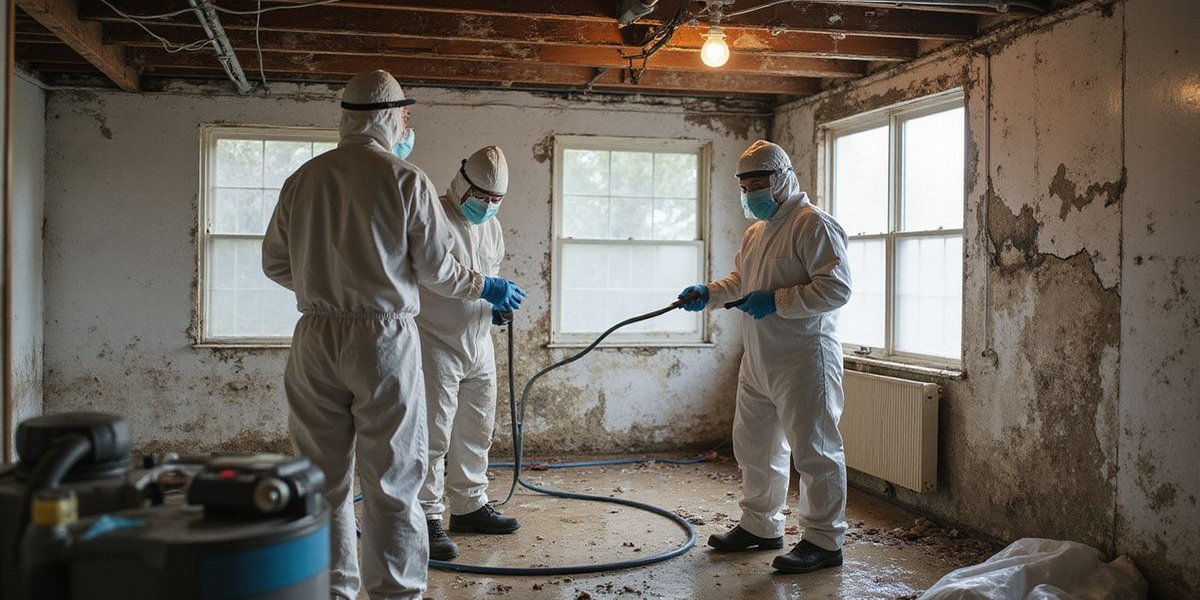
- Containment of affected areas to protect the rest of your home.
- Removal of contaminated materials and HEPA vacuuming of surfaces.
- Application of antimicrobial treatments to inhibit future growth.
Prevention Planning
- We partner with top waterproofing specialists to fix the root cause.
- Installation of commercial-grade dehumidification systems.
- Annual inspections to catch new issues before they become disasters.
Don’t wait for the musty smell to take over your home. If you suspect moisture issues or mold growth, contact Salisbury Mold for a free mold inspection. We serve homeowners throughout Wicomico, Worcester, Somerset, and Dorchester Counties with same-day appointments available.
Tags
Need Help With Mold?
Our IICRC-certified technicians are ready to help you with any mold concerns. Contact us for a free inspection.