Why Crawl Space Encapsulation Matters
Your crawl space might be out of sight, but problems there affect your entire home. Up to 50% of the air you breathe on your first floor comes from the crawl space. When that space is damp, moldy, and contaminated, your indoor air quality suffers.
On Maryland’s Eastern Shore, the combination of high water tables, coastal humidity, and frequent storms makes moisture intrusion into crawl spaces almost inevitable. Traditional vented crawl spaces simply don’t work well in our climate—they let humid air in during summer, creating condensation and promoting mold growth.
Signs Your Crawl Space Needs Attention
You may need crawl space encapsulation if you notice:
- Musty odors in your home, especially on the first floor
- High humidity levels inside your house
- Cold floors in winter that are hard to heat
- Mold or mildew visible in the crawl space
- Standing water after rain events
- Pest problems like termites or rodents
- Sagging or bouncy floors from moisture-damaged floor joists
- Higher than normal energy bills
The Problem with Vented Crawl Spaces
For decades, building codes required vented crawl spaces based on the theory that outside air would keep them dry. Research has shown this doesn’t work, especially in humid climates like the Eastern Shore.
During summer, hot humid air enters the crawl space and condenses on cooler surfaces, actually adding moisture. During winter, cold air increases heating costs. The solution is to condition the crawl space like part of your home rather than treating it like outdoors.
Our Encapsulation Process
Initial Assessment
We inspect your crawl space to evaluate:
- Current moisture levels
- Existing mold or moisture damage
- Standing water or drainage issues
- Structural conditions
- Access points and dimensions
Preparation Work
Before encapsulation, we:
- Remove debris and old insulation
- Treat any existing mold
- Address standing water issues
- Install sump pump if needed
- Repair damaged floor joists if required
Full Encapsulation
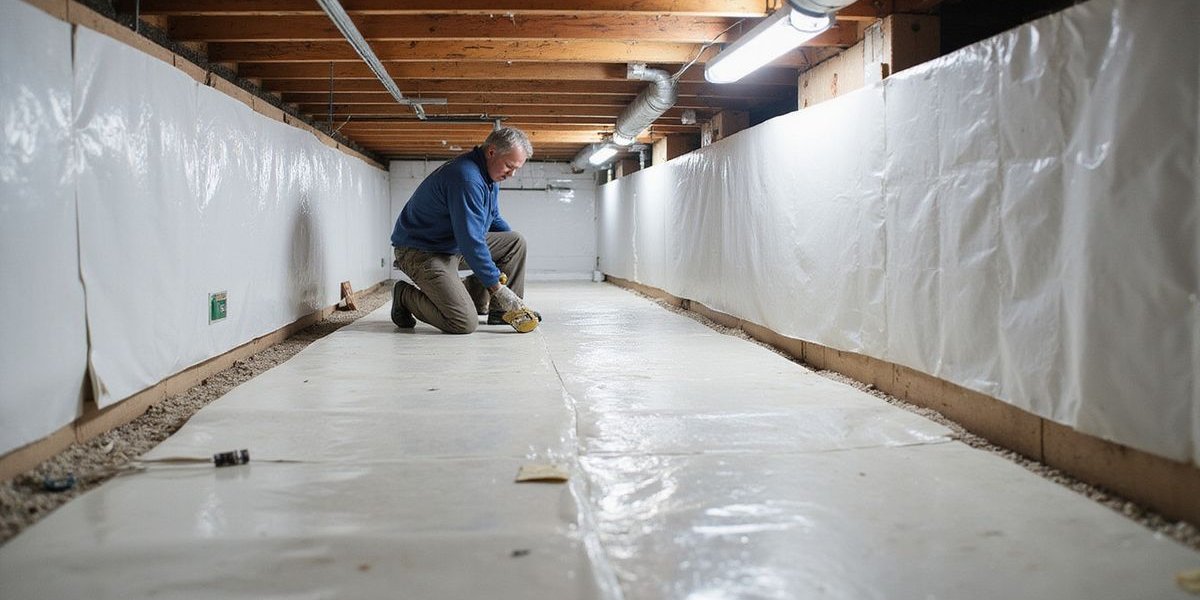
Our encapsulation includes:
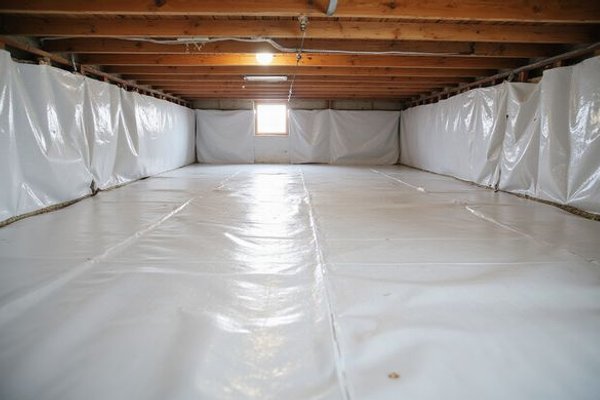
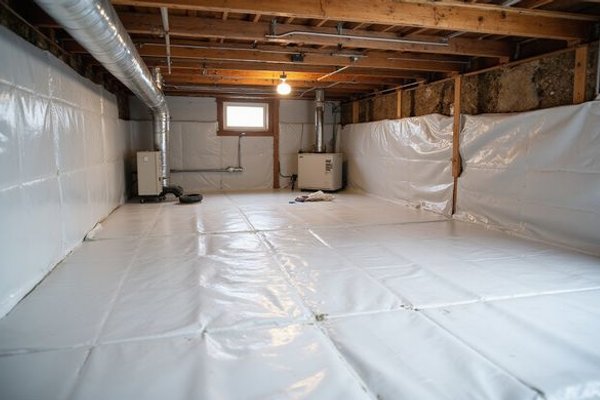
- Floor vapor barrier: Heavy-duty 20-mil liner covers entire floor, overlapped and sealed at seams
- Wall vapor barrier: Liner extends up walls and attaches at top
- Vent sealing: Foundation vents are sealed to prevent outside air intrusion
- Sealing penetrations: Pipes and wires entering crawl space are sealed
- Access door: Insulated, weatherstripped door for entry
Climate Control
A sealed crawl space needs conditioning:
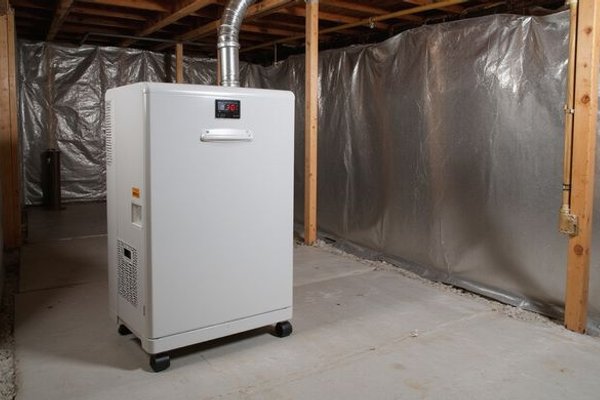
- Dehumidifier: Sized for your space, with automatic drainage
- Monitoring: Humidity levels tracked to ensure proper conditions
- Optional conditioning: Connection to HVAC in some cases
Benefits of Crawl Space Encapsulation
Improved Air Quality
No more musty odors or mold spores entering your living space. Many homeowners report breathing easier after encapsulation.
Energy Savings
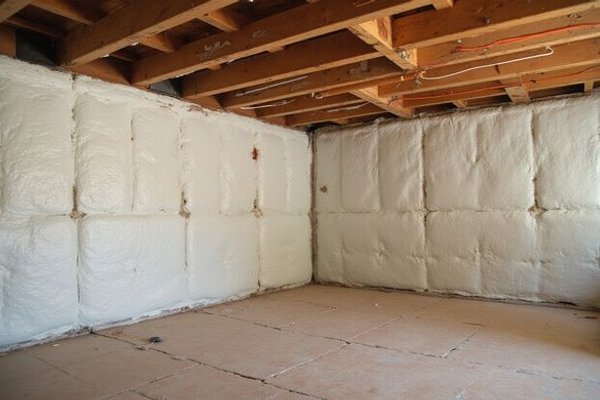
A sealed, insulated crawl space reduces heating and cooling costs. Floors feel more comfortable year-round.
Pest Prevention
Sealed crawl spaces are less attractive to insects and rodents looking for moisture and shelter.
Structural Protection
Dry conditions prevent rot and decay in floor joists and subflooring, protecting your home’s structure.
Storage Space
A clean, dry encapsulated crawl space can be used for storage.
Maintenance and Warranty
Our encapsulation systems are designed for minimal maintenance:
- Annual inspection recommended
- Dehumidifier filter changes
- Monitoring for any issues
We back our work with comprehensive warranty coverage on materials and installation.
Free Crawl Space Assessment
Not sure if encapsulation is right for your home? Schedule a free assessment. We’ll inspect your crawl space, explain what we find, and provide a detailed proposal. There’s no obligation and no pressure—just honest answers about your best options.